
An equipment list is a useful output of a room design. It is a poor starting point when nobody has agreed how the room will be used.
Before comparing cameras or displays, describe the meetings the space needs to support. A fixed boardroom, a flexible training room and an event space create different requirements for seating, presentation and participation.
Write down the actual meeting formats.
Will everyone be in the room, or will remote participants join? Is the main task discussion, presenting detailed documents or listening to a speaker? Will furniture stay in place or change between sessions?
These questions provide a more useful brief than a preferred screen size or a list of familiar product names. They also give architects, IT teams and AV planners a common starting point.
Look at the room from each seat.
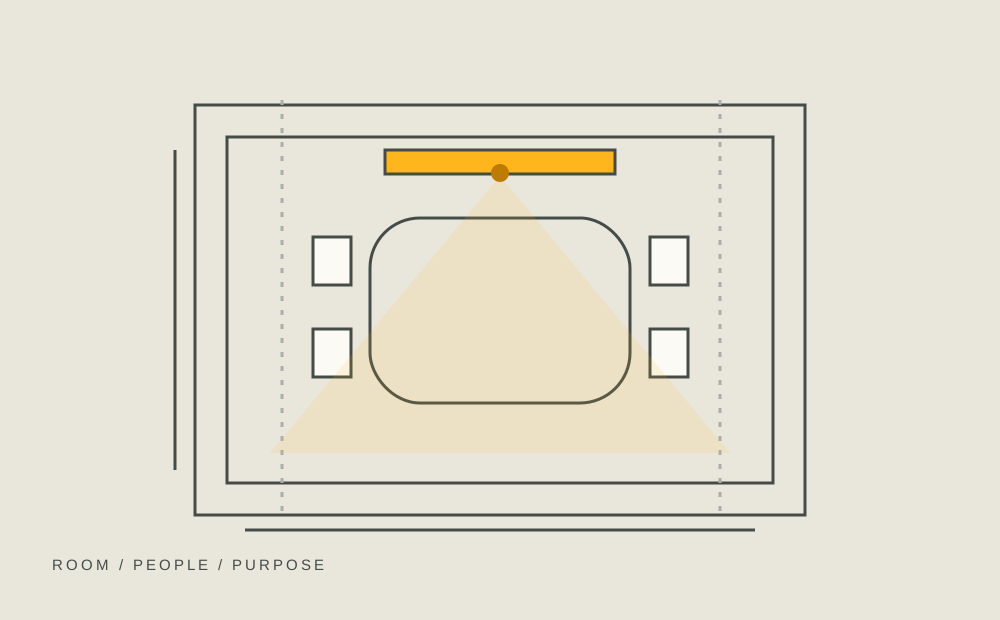
A display must be useful from the places people actually sit. Consider the content being shown, viewing distance and sightlines. A camera needs to frame the intended participants; its field of view and position should be considered with the seating plan.
Logitech’s installation guidance recommends considering camera placement while installing displays and choosing a field of view that covers the room’s intended seating. The practical lesson is to plan the relationship between the room and the equipment before fixing mounting positions.
Include the building interfaces early.
Power, network connections, cable routes and equipment locations influence installation. The room’s surfaces, lighting and furniture also affect how media technology can be integrated.
Bring the relevant drawings to the planning discussion. Mark known connection points and distinguish what is already installed from what is still being designed.
Prepare a short project brief.
- Describe the room, its capacity and the expected seating arrangements.
- List the meeting and presentation formats it must support.
- Identify existing systems, connection points and project constraints.
- Include available plans and the current stage of the project.
The brief does not need to solve the technical design. It needs to make the purpose of that design clear.
Explore our video and conferencing integration or send us your room brief to start a project discussion.